A summer of discovery in Paris: revisiting North Africa's archaeological heritage at the Muséum national d'Histoire naturelle
This summer, Giulio Lucarini, Senior Researcher at CNR ISPC, joined the Muséum national d’Histoire naturelle (MNHN) in Paris as Invited Professor, carrying out research on some of the most important North African archaeological collections preserved in France within the framework of the UPSTREAM project.
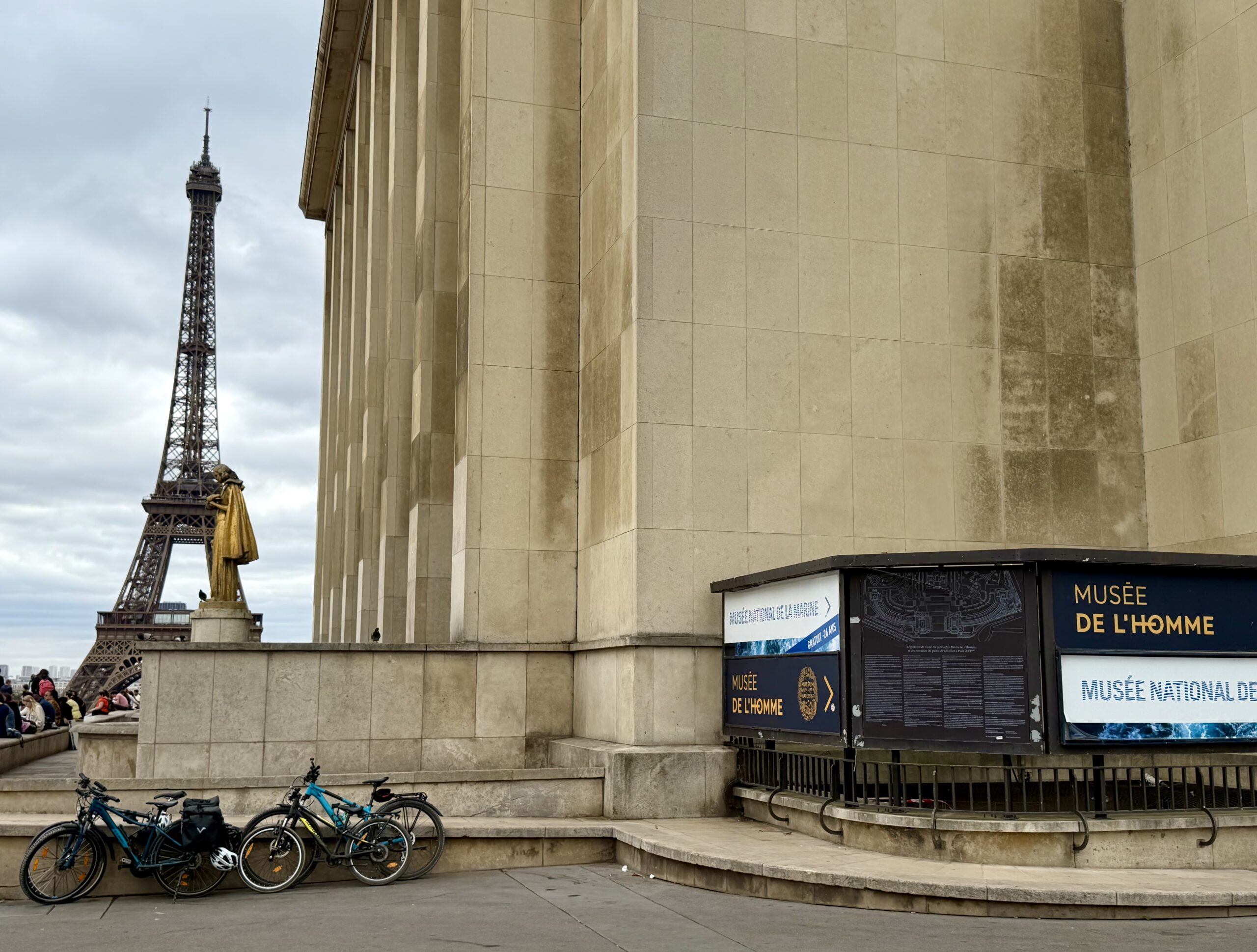
During June and July 2026, hosted by the CNRS UMR 7194 research unit Histoire naturelle des humanités préhistoriques, Lucarini conducted an intensive research programme focused on archaeological collections housed at the Musée de l’Homme and the Institut de Paléontologie Humaine.
The fellowship was developed within the framework of the UPSTREAM project (UPdating Sources, Tools and REsearch in Archaeological Collections of the Maghreb), which aims to reassess historical archaeological collections through innovative methodologies, international collaboration, and digital accessibility.
Exploring historical collections of North Africa
During his stay in Paris, Lucarini examined a wide range of archaeological materials housed at the Musée de l’Homme and the Institut de Paléontologie Humaine. These collections include stone and bone tools, personal ornaments, mobiliary art, grinding implements, and faunal remains recovered during excavations conducted across the Maghreb throughout the twentieth century.
These artefacts represent a unique record of North Africa’s prehistoric past and continue to offer valuable insights into the lives, technologies, and cultural practices of ancient communities. At the same time, they reflect a complex historical context, as many were collected during the colonial period. Revisiting these collections today therefore requires both scientific rigour and a critical awareness of their historical and ethical dimensions.
“These collections are far more than museum archives. They are repositories of knowledge that can still transform our understanding of North Africa’s prehistory. By combining new analytical methods, international collaboration, and open digital access, UPSTREAM is helping to bring this knowledge back into circulation and make it available to a broader scientific community.”
Says Giulio Lucarini, Senior Researcher at CNR ISPC



UPSTREAM and the challenge of digital repatriation
Addressing these challenges is one of the central aims of the UPSTREAM project. Beyond generating new archaeological knowledge, the initiative promotes a collaborative and inclusive research model that strengthens partnerships between European and North African researchers, students, and heritage institutions.
A key outcome of the project will be the development of an open-access scientific digital database bringing together archival documentation, analytical records, and contextual information related to archaeological collections from the Maghreb. By making these resources freely accessible, UPSTREAM seeks to facilitate what is increasingly described as a process of digital repatriation, allowing knowledge associated with dispersed collections to be shared more widely and equitably.
This digital infrastructure will not only support ongoing research but will also create new opportunities for future projects, doctoral studies, and international collaborations.
Rethinking the role of North Africa in prehistory
The research carried out within UPSTREAM contributes to a growing body of evidence highlighting the central role of North Africa in human prehistory. Rather than being viewed as a peripheral recipient of cultural and technological developments originating elsewhere, the region is increasingly recognised as a dynamic centre of innovation, interaction, and knowledge production.
By combining the study of legacy collections with advanced analytical approaches, the project offers new perspectives on long-term processes of cultural change and technological development across the African continent and the Mediterranean.


Strengthening international scientific cooperation
The invited professorship also builds upon a longstanding collaboration between Giulio Lucarini and the Muséum national d’Histoire naturelle. For several years, he has contributed to the Master’s programme “Quaternary Prehistory Bioarchaeology”, teaching within the course QPB12 – Préhistoire du Maghreb and supporting the training of a new generation of specialists in North African archaeology.
The fellowship therefore represented both an important research opportunity and a further step in consolidating international scientific cooperation between CNR ISPC, the MNHN, CNRS, and other partner institutions.
Looking ahead
As the first phase of UPSTREAM comes to an end, new activities are already underway. Future work will focus on identifying key case studies for interdisciplinary investigation, expanding the project’s digital infrastructure, and strengthening the international research network that underpins the initiative.
The experience in Paris has confirmed the value of approaching archaeological collections as shared scientific resources—collections that acquire new meanings when studied collaboratively, interpreted through multiple perspectives, and made accessible to the widest possible community.
Above all, these two months have reinforced a simple conviction: that archaeological collections take on new meaning when they are studied collaboratively, interpreted through multiple perspectives, and made accessible to the widest possible community. This experience would not have been possible without the generous support of colleagues in Paris. I am particularly grateful to Roland Nespoulet and Vincent Lebreton for championing this collaboration, and to Christine Verna, Director of CNRS UMR 7194, together with all members of the unit, for their hospitality, intellectual engagement and commitment to this work. I would also like to thank the colleagues of the Direction générale déléguée aux Collections du Muséum for their essential support, as well as Anna Echassoux and the Institut de Paléontologie Humaine – Fondation Prince Albert Ier de Monaco for their warm hospitality throughout these two months. My heartfelt thanks go to the entire MNHN community for two inspiring months of research, collaboration, friendship and discovery.
Concludes G. Lucarini.
For further information
Muséum national d’Histoire naturelle →
Musée de l’Homme →
Institut de Paléontologie Humaine →
CNRS UMR 7194 – Histoire naturelle des humanités préhistoriques →